

Why Most Impact Startups Fail
Before They Reach the Communities They Want to Serve

A startup founder who has a vision of serving communities, making an impact on the planet positively, often feels the burden of execution on his/her shoulder. More than other founders.
Lot of times this vision is driven by emotions. These founders feel the pain and are moved by it. In such a scenario, if the startup fails before scaling, it doesn’t just become a waste of time and money. In many cases it also downs the hope of the founder. The probability of better outcomes for the world also reduces.
I have been working with early stage impact startups for as long as I started my career. The problem these founders can potentially solve are huge. So their success is not held back by the market size. Success becomes challenging because the solution never reaches the people it was built for.
I’ve seen founders run pilots, get early validation, even attract partners. On paper, everything looks like it should work. But outside that controlled environment, the adoption at scale just doesn’t happen.
A research in Stanford Social Innovation Review[1] called this pattern out years ago in global health, where strong pilots failed to scale, often referred to as “pilotitis. Often the early teams are highly aligned on building the most amazing, helpful product but miss the marketing part in the startup curriculum. IFAD’s[2] 2024 review points out that teams need to move beyond pilots and design for scale from the start, with targets shifting from thousands of users to millions.
The path to real usage, large scale outcomes looks hard.
Growth Motions is where I share practical ideas on startup branding, performance marketing, and growth systems. Subscribe if you want marketing that feels clearer, calmer, and easier to scale.
The Hidden Gap Between Product and Access
Building the product/service does not automatically mean that it would reach your target audience just because the intentions are noble.
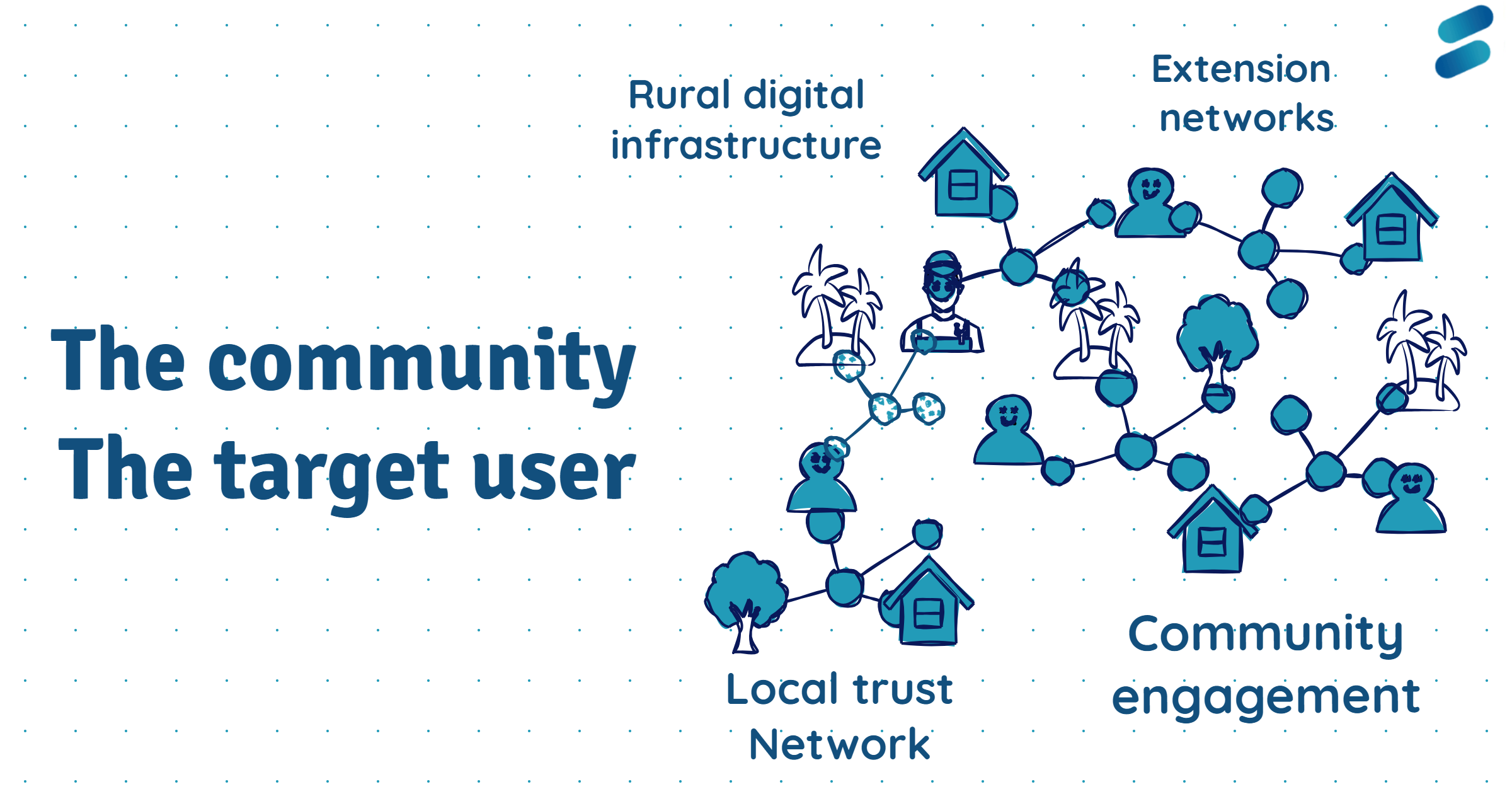
In India, for instance, this problem was brilliantly understood by the ITC Agribusiness division. They created world’s largest rural digital infrastructure [3] And in process, created local coordinators who acted as the bridge between the platform and farmers
That shift changed how the system worked. Adoption did not depend on awareness campaigns. It moved through people who were already trusted in the community.
A similar pattern shows up in Africa with Hello Tractor[4]. Instead of relying only on a digital platform, they built a network of booking agents who help farmers access tractors, even if they don’t use smartphones themselves. These agents operate within local communities, translating access into actual usage.
Across both cases, the product did not scale because it existed. It scaled because someone designed how it would reach the user.
Why Impact Startups Struggle to Move Beyond Pilots?
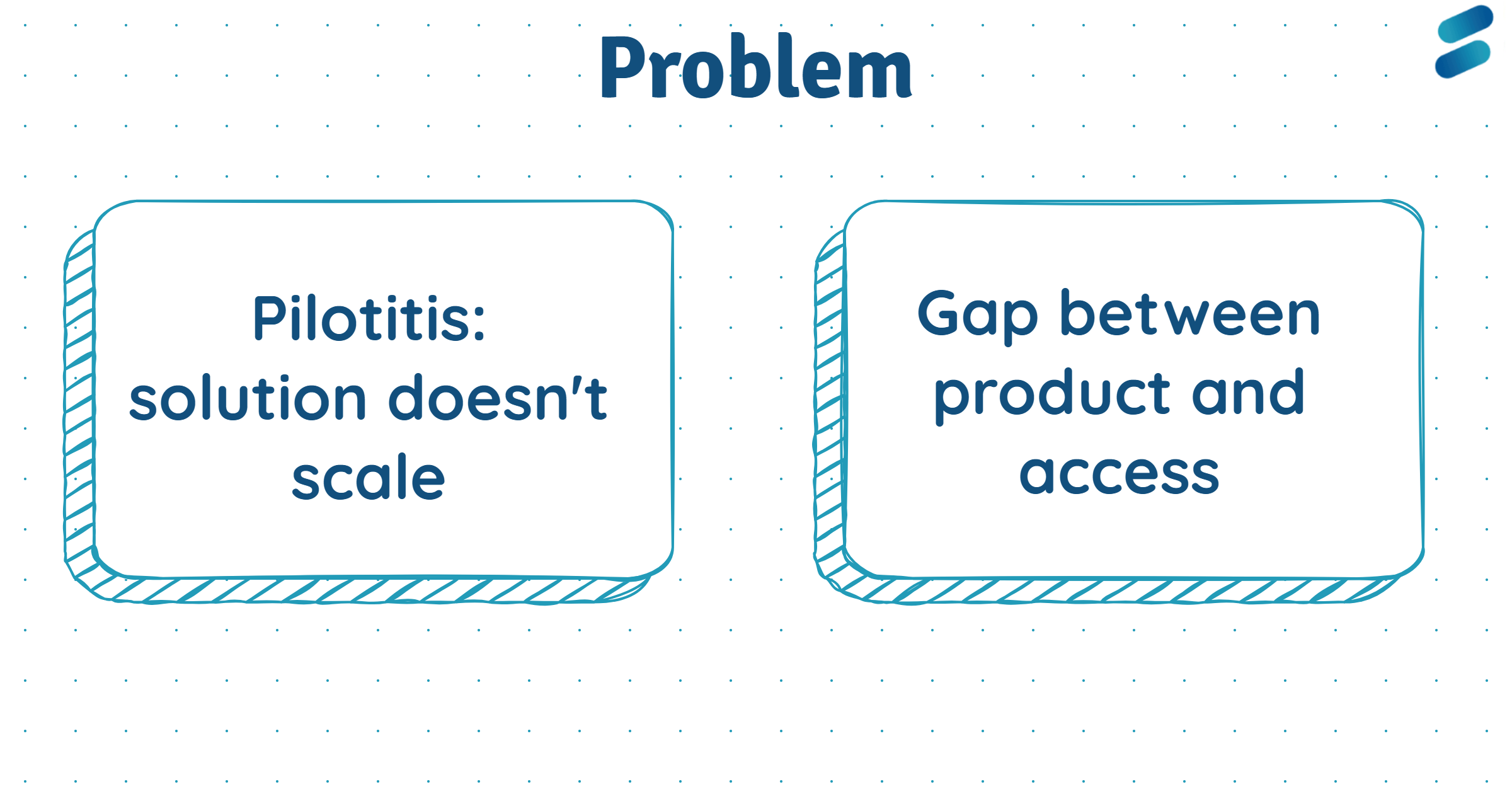
Pilots feel like progress.
A climate app gets early downloads during a campaign.
An agri platform works well in one district.
A social impact solution shows strong results with one partner.
At first, it gives the impression that everything is working.But once the initial push is gone, usage drops. What worked inside a pilot does not repeat on its own.And this is exactly where the growth stalls. The solutions are strong but the systems built around it are weak.
So founders turn to AI.
AI is now being used to scale advisory, automate engagement, and personalize experiences. Climate tools use it to track actions and give recommendations. Agri platforms use it for advisory. Social platforms use it to guide users or match services. It helps.
AI can reduce the cost of reaching users. It can deliver consistent communication. It can adapt content based on context. I cannot imagine it solving the core problem on its own, which is Adoption. Again, not yet.
Even in digital agriculture, large-scale implementations show that digital tools work best when combined with human systems like extension networks, local agents, or community intermediaries.
The same applies across sectors.
People adopt something when it fits into how they already live or work, and when it comes through a channel they trust. This is where digital channels actually start working.
Younger users, especially in emerging markets, are more open to trying new tools. They are more comfortable with mobile platforms, messaging interfaces, and digital transactions. In many cases, they become the bridge for others in their communities.
And this is where AI starts to make sense.AI can serve as a supplemental layer for the system. It cannot replace the actual system for impact startups at this point. In Saas, yes, in Impact sectors, maybe in a few years, who knows.
However, when paired with the right distribution and trust layer, AI can:
• Support consistent engagement without founder effort
• Deliver localized guidance at scale
• Reduce dependency on manual operations
Without that layer, it stays inside the pilot.
Why Traditional Growth Advice Breaks in Impact Startups
A lot of founders in these impact sector follow what has already worked in other industries. Run paid ads to acquire users, start creating content, optimize funnels, track CAC, and then try to scale what performs.
These things, popularly known as ‘playbooks’ work well when the user is already reachable and ready to act. This assumption does more harm than good in the impact sectors.
In climate, you are asking users to change behavior that does not feel urgent in their daily lives. In agriculture, the user you want to reach may not even be active on the channels you are investing in. In social impact, adoption often depends on institutions or community systems rather than individual decisions.
So the outcome starts to look predictable. Ads bring traffic, but usage does not follow. Content builds awareness, but action remains low. Funnels convert initial curiosity, but not long-term engagement.
This is not a problem of execution. It is a mismatch of channels.
Even where digital tools are effective, they rarely work in isolation. In agriculture, for instance, digital advisory services are more likely to perform when they are supplemented with extension networks, field agents, or local intermediaries who already have access and trust. Although I have seen successful Social Media Influencers in India in Agri, without the trust layer, the product struggles to move beyond surface-level engagement.
The core issue is simple. Traditional growth assumes access. Impact startups have to build it. Until that gap is addressed, increasing spend or optimizing funnels only amplifies noise, not adoption.
What Actually Works: Designing the System
If access is the real constraint, then growth has to start there.
Across climate, agriculture, and social impact, the startups that move beyond pilots do one thing differently. Rather than treating growth as a top-of-funnel problem, they treat it as a system design problem.
From what I’ve seen, the shift happens when founders start building around four
layers.
Access → Trust → Habit → Scale
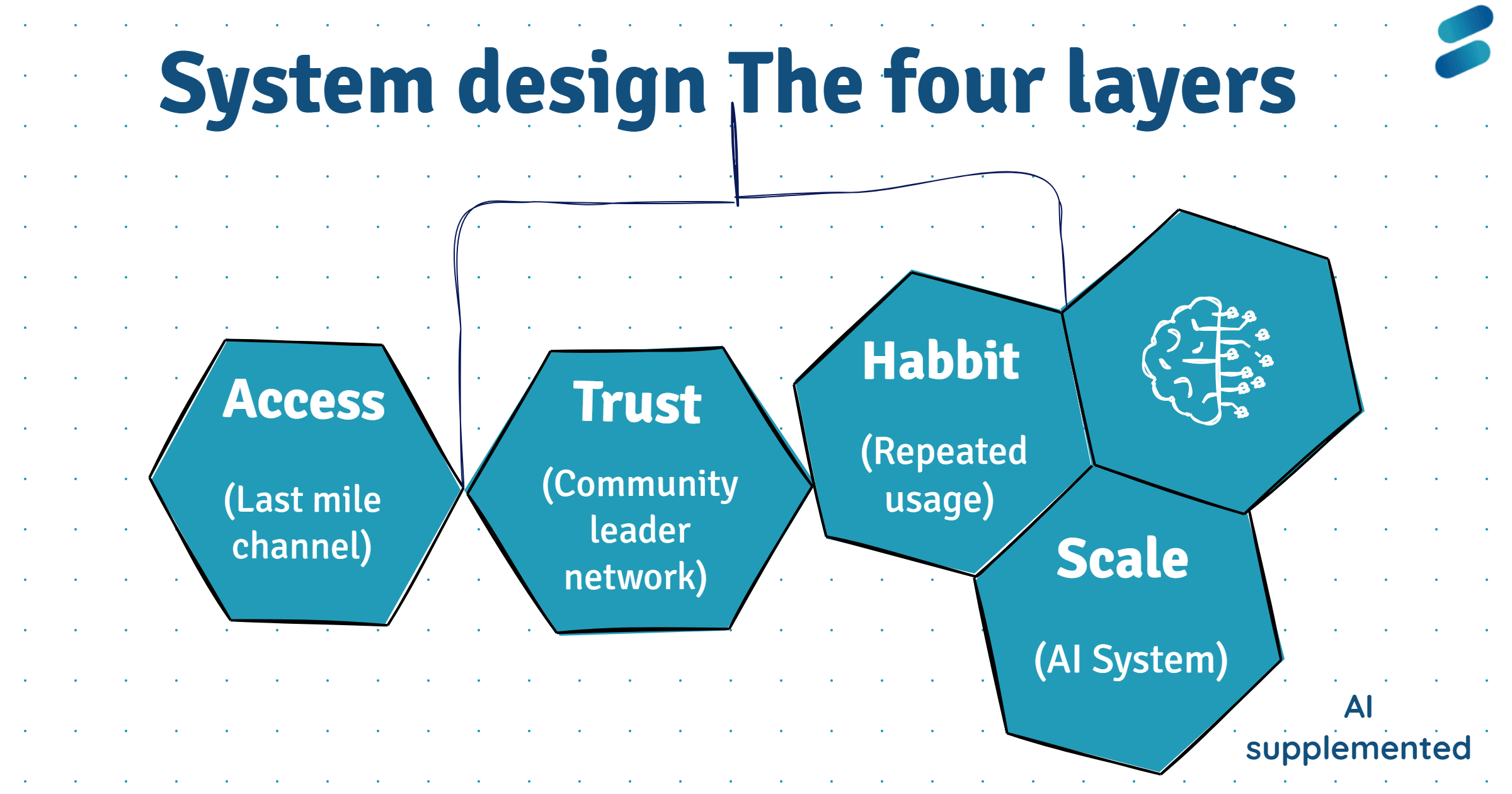
It sounds simple, but each layer requires deliberate design.
1. Access comes first. It is about how the product reaches the user in the first place. In many cases, this means working through last-mile channels like local coordinators, community partners, institutions, or youth who are already a part of the ecosystem. Digital channels can support this, but I don’t think that they replace it yet.
2. Once access is created, trust becomes the next constraint. People don’t adopt just because something is available. They adopt when it comes through a source they already rely on. This is why systems that involve NGOs, universities, farmer networks, or community leaders tend to see higher uptake.
Startups can also build this layer deliberately through branding. Not in the visual sense alone, but in how clearly they communicate what they do, who it is for, and what outcome a user can expect. In early stages, trust often comes from simple signals. For example, a clear message that a farmer can understand in seconds will be highly effective. Consistent communication triggers the psychological feeling of - Its ‘familiar’, thus, it’s ‘safe’,. And nothing can beat proof through real user stories.
Trust is borrowed before it is built, but it can be reinforced through how the startup shows up at every touchpoint.
3. After that comes habit. This is where most products break. The goal is repeated usage, not just initial usage. In climate, this means encouraging actions which can be turned daily routines. . In agri, it means aligning advisory with real farming cycles. In social impact, it means creating interactions that create intrinsic motivation. This is where digital tools, including AI, can play a meaningful role. They can help deliver consistent, timely, and contextual engagement.
4. Scale only happens when the first three layers are working together. At this stage, growth stops being dependent on constant effort. The system starts to move on its own. Digital channels become more effective because they are now amplifying something that already works, not trying to create it from scratch.
One thing that has to be noted here that targeting at this stage should become sharper. Instead of trying to reach everyone, founders see better results when they start with users who are already more open to trying out new things, new tools. Basically ‘think different’. Younger users, especially in emerging markets, are often more comfortable with smartphones, messaging, and digital transactions. Many times, they also act as informal support for others, helping extend adoption beyond themselves.
AI fits into this system, but not at the beginning. It works best as a layer on top of access and trust. It can reduce the cost of delivering services, improve consistency, and personalize interactions at scale. But without the underlying system, it remains underutilized.
The shift is subtle but important. Growth is all about designing how your product/ service fits into the user’s world. Simply pushing the product harder won’t do the job.
⸻
References
[1] Fabiano, A. L. (2013). To Reach Scale, You Need to Build Trust. Stanford Social Innovation Review. https://doi.org/10.48558/HWHE-BN40
[2] International Fund for Agricultural Development (IFAD). (2024). Midterm review of the 2020–2030 IFAD Information and Communication Technology for Development (ICT4D) strategy: Building and looking to the future (EB 2024/OR/26). https:// webapps.ifad.org/members/executive-board-online-review/docs/english/EB-2024- OR-26.pdf
[3] ITC Limited. (n.d.). e-Choupal. https://itcportal.com/itc-businesses/agri-business/ itc-e-choupal.html
[4] World Bank. (2021). Digital solutions for youth agripreneurs (Knowledge Brief Series, Issue 14). https://documents1.worldbank.org/curated/en/ 099529103152349556/pdf/IDU0791fb1a50e0ea043bc091820df26d397176f.pdf